
In high-friction environments—where laws are inconsistently enforced, informal networks can determine outcomes, and assets move faster than paperwork—clarity is a competitive advantage. The ability to notice stress signals early, stabilize arousal, and act from a deliberate state is not a soft skill; it is operational infrastructure. Effective nervous system regulation protocols turn physiology into strategy by protecting focus, memory, and interpersonal judgment when it matters most. Whether coordinating cross-border logistics, navigating a contentious commercial dispute, or managing a surprise audit, knowing how to regulate on demand supports better negotiations, cleaner timelines, and fewer unforced errors.
Regulation is not about suppressing emotion. It is about tightly coupling awareness and action so that perception remains wide when the situation narrows. A practical protocol gives operators a stepwise, testable method to move from threat reactivity to executive control—without needing special equipment, long breaks, or perfect conditions. That shift, repeated consistently, compounds into more credible testimony, better records, stronger counterpart engagement, and a steadier approach to legal resolution and asset protection in weak-rule settings.
The science and stakes of regulation in weak-rule environments
The body’s threat-detection and response system—the autonomic nervous system—runs in the background, shaping what is seen, remembered, and decided. Under sudden uncertainty, the sympathetic branch accelerates breathing and heart rate, narrows attention, and primes fast action. That response is adaptive when sprinting across a road; it is costly when parsing a contract clause, answering a leading question, or choosing whether to escalate a meeting. The parasympathetic branch, largely mediated by the vagus nerve, supports recovery, social engagement, and perspective taking. Skilled operators learn to shift gears on cue, restoring a workable “window of tolerance” so that complex signals are not flattened into simple threats.
In emerging markets with weak enforcement, the nervous system is repeatedly pulled into hypervigilance: unannounced inspections, ambiguous summons, shifting guidance, and reputational pressure through informal channels. Chronic activation degrades sleep, shortens time horizons, and erodes the precise capacities required to operate cleanly under scrutiny—source evaluation, document control, relationship mapping, and disciplined communication. Over time, the brain encodes risk not just as an external pattern but as an internal baseline. Without a protocol, people habituate to urgency and mistake it for evidence.
Regulation begins with interoception—accurate sensing of internal state. Breath rate, muscle tone, micro-tremors in the hands, facial tension, and visual tunnel all report status long before a mistake appears on a spreadsheet. From there, the task is not to become “calm” in an absolute sense; it is to achieve operational neutrality—enough stability to widen attention, choose language carefully, and sequence actions with clean edges. Measurable anchors help: a shift from 28 to 10 breaths per minute, the ability to read a full paragraph aloud without breath-grabbing, the return of peripheral vision sufficient to note who enters the room. In a deposition, hearing, or ministerial meeting, those metrics quietly separate signal from noise.
Regulation also protects memory. Under stress, the hippocampus and prefrontal cortex cede control to the amygdala, and recall becomes state-dependent. When operators close the loop—downshifting arousal after events—the brain files details more coherently. That makes timeline construction, affidavit drafting, and cross-checking source material faster and less biased. The same physiology that stops an argument from escalating also preserves facts for court, negotiation, or public reporting. In effect, nervous system regulation protocols convert bodily control into legal and strategic leverage in the very places where leverage is often informal.
A field-ready protocol: assess, interrupt, reset, re-engage
Good protocols are simple under pressure, repeatable in constrained environments, and evidence-based enough to trust. A four-phase approach—Assess, Interrupt, Reset, Re-engage—fits meetings, vehicles, corridors, lobbies, and courtrooms without attracting unwanted attention.
Assess: Start with two discreet scans. First, count breaths for 30 seconds without changing them. Second, sweep posture, jaw, hands, and visual field. If breath exceeds 20 per minute, jaw is clenched, hands are cold, or vision feels tunnelled, sympathetic activation is up. Name it internally: “high arousal.” This brief label recruits the prefrontal cortex, creating the first wedge of choice. In offices and official settings, the scan can be done while reviewing a document or waiting for the next question.
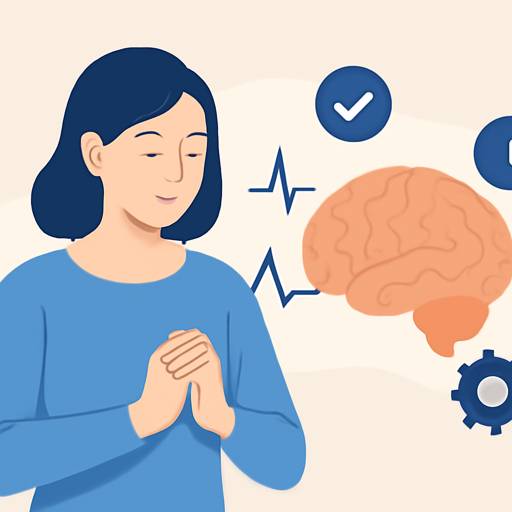
Interrupt: Inject a quick pattern breaker. The physiological sigh—a double inhale through the nose followed by a long, relaxed exhale through the mouth—reduces CO2 and quiets the nervous system within 60–90 seconds. Two to five cycles are effective and unobtrusive. If the room allows, add “orienting”: slowly turn the head and eyes to register corners, exits, and neutral objects. This widens perception and signals safety to the brainstem. Micro-release the jaw and tongue to lower facial tension; a relaxed face invites cooperative responses and steadies voice tone.
Reset: Establish a sustainable rhythm. Shift to a 4–6 breath-per-minute cadence: about 5-second inhale, 5–7-second exhale, through the nose if possible. Keep shoulders heavy and lengthen the exhale slightly to encourage parasympathetic dominance. If seated, place feet flat and press lightly into the ground for 10 seconds to wake proprioception. If standing, soften knees and feel weight distribution. These signals restore body mapping and reduce drift into catastrophic thinking. Pair the breath with a single sentence intention: “Answer slowly and only to the question.” A clear rule substitutes for rumination.
Re-engage: Re-enter the interaction with measured voice and calibrated eye contact. Use deliberate pauses at punctuation when reading. If handling documents, place them square and move one sheet at a time—the physical order cues cognitive order. Between exchanges, maintain one breath cycle before responding. When the stakes spike—raised voices, unexpected conditions—return to one physiological sigh, then resume cadence. Over time, the loop becomes automatic: the body flags load, the mind inserts a breaker, and the operator continues with control.
Drills make the protocol reliable. Rehearse 90-second resets between back-to-back calls; box-breathe during elevator rides; practice reading a difficult paragraph aloud while holding a 5/7 cadence. Layer in short cold-water face splashes in private to train rapid downshift, and brief, brisk walks before key meetings to discharge activation safely. Unified frameworks like nervous system regulation protocols integrate these elements so they are available under field conditions—no mats, no apps, just a body that follows orders when the environment does not.
Real-world applications: negotiation, legal proceedings, and asset protection
Consider a dispute meeting in a capital city where institutional authority is mixed with informal influence. An operator arrives to find an extra attendee—introduced as an “advisor”—who shifts the tone. Heart rate spikes; the room feels hot. With Assess and Interrupt, the operator identifies the state, inserts two physiological sighs, and orients to the room. Reset settles breath to a steady cadence. Re-engage focuses on slow, precise language: answer only the question asked, request clarifications in writing, and maintain neutral posture. The physiological shift keeps attention wide enough to notice a small change in phrasing, catch a new draft term, and pause the meeting for review. Not dramatic—but dramatic outcomes often hinge on protecting such inches.
During legal testimony in a venue with weak enforcement consistency, state-dependent memory can scramble timelines. Entering the room, the operator performs a quiet cadence reset, grounds feet, and rehearses a one-line intention: “I will speak to what I directly observed.” When rapid-fire questions begin, a brief pause anchors one full breath before answering. The breath cue separates questions designed to provoke from those requiring substance. Post-hearing, a decompression walk with paced breathing ensures details file cleanly. Back at the desk, drafting the record is faster; contradictions are fewer; and the file holds up better under cross-check by counsel or public scrutiny.
Asset protection scenarios also benefit. Suppose a warehouse in a provincial hub faces surprise inspections by rotating teams. Staff trained in basic nervous system regulation protocols maintain composure when uniforms arrive, greet consistently, and adhere to a script without sounding rehearsed. By controlling tone and timing, the team avoids defensive signals that invite deeper fishing. In parallel, managers keep situational awareness broad enough to track who is present, what is documented, and where materials are moved. After the visit, a structured cool-down and immediate note capture reduce omission bias. If patterns emerge—timing, personnel, asks—they surface faster, supporting cleaner escalation or legal response.
Cross-border transit offers similar cases. At a checkpoint, an officer requests supplementary documents that are not required by written regulation. The operator notices breath rate climbing and vision narrowing. One quiet sigh, a longer exhale, and an internal rule—“polite, short, certain”—prevent unnecessary argument. With composure, the operator presents the exact regulation, remains silent long enough for it to be read, and resists filling silence with concessions. The physiological guardrails protect the strategic one: do not volunteer leverage. Even when outcomes remain uncertain, the process yields better records—names, times, remarks—usable later for legal resolution or public reporting.
These examples share a pattern. First, the physiology flips from reactivity to neutrality fast enough to preserve options. Second, language and timing improve: the right pauses, the right questions, fewer extra words. Third, documentation quality increases because the brain is not battling its own alarm during recall. In composite, these gains change the slope of risk in environments where relationships and narratives often outrun statutes. Operators who train their state—just as deliberately as they learn the law—build a behavioral moat around their judgment. That moat pays compounding dividends across negotiations, hearings, due diligence, and day-to-day governance in emerging markets where pressure is the baseline, not the exception.

Busan robotics engineer roaming Casablanca’s medinas with a mirrorless camera. Mina explains swarm drones, North African street art, and K-beauty chemistry—all in crisp, bilingual prose. She bakes Moroccan-style hotteok to break language barriers.